HVAC service records that support the next decision
Build asset-specific service records with findings, measurements, approvals and follow-up so invoices become useful operating evidence.
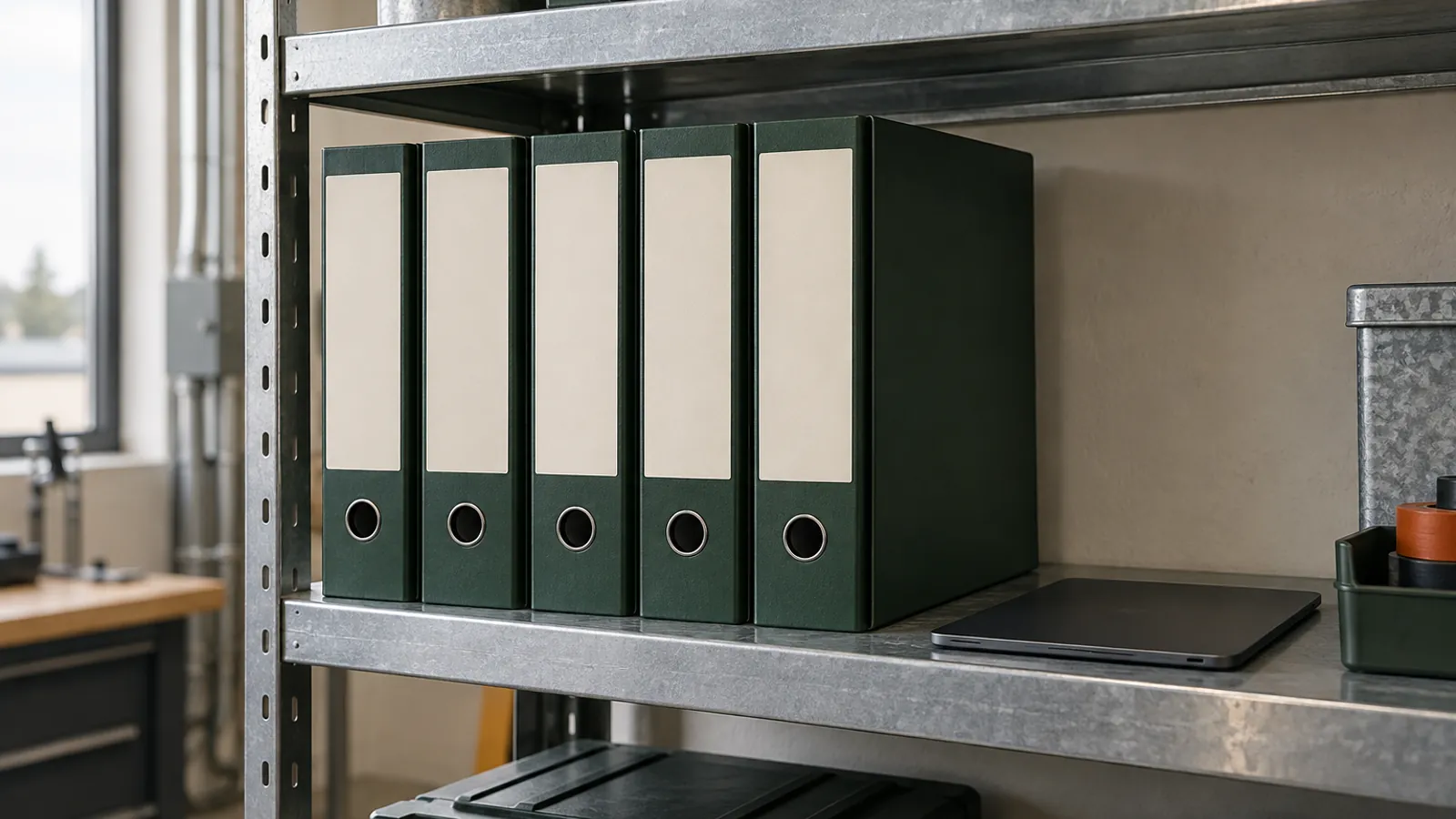
An attendance record is not a condition record
Useful HVAC service records show what happened to a specific asset, what was found and what action remains. A signature confirming attendance does not establish that every task was completed or that the equipment is in acceptable condition. Agree on the report format before service begins.
Use the same asset IDs in the register, contract, service report and invoice. If technicians use informal names while finance uses equipment numbers, reconcile them at handover. This simple connection lets the facility track repeated faults and verify that the billed work belongs to the contracted equipment.
Capture tasks and exceptions separately
For each planned task, record completed, not applicable or deferred, with a reason where necessary. Identify access restrictions and the person responsible for resolving them. A deferred task should remain open until it is completed or formally removed from the scope.
Avoid reports that automatically mark the entire visit complete when only some assets were accessible. Ask the contractor to separate site attendance from asset-level completion. This makes payment review and rescheduling clearer. It also prevents an annual visit count from concealing a unit that was repeatedly skipped because a key, escort or shutdown approval was missing.
Make measurements interpretable
A measurement should have a value, units, asset ID and relevant operating condition. A bare number without context may not be useful for comparison. Ask the qualified service team which measurements are meaningful for the equipment and how abnormal results will be evaluated.
Do not create a universal pass/fail limit from a general article. Manufacturer requirements and qualified assessment govern interpretation. Record the instrument or method when it is necessary to understand the result. The facility’s objective is to retain usable evidence, not to collect a large volume of numbers that nobody is responsible for reviewing.
Connect findings to approval and closure
Each defect should identify the observation, proposed next step, priority assigned by the qualified team and the owner’s decision. Keep the original finding even when the remedy is deferred. If additional work is authorized, include the approval reference and later completion evidence.
Illustrative workflow: a service report records an unresolved control issue; the manager authorizes a diagnostic visit; the diagnostic report identifies a cause; a separate repair is approved and tested. These are distinct records. Combining them into a single line saying fixed loses the evidence needed to understand the invoice and evaluate a recurrence.
Use a minimum record structure
| Field | Practical use |
|---|---|
| Asset ID and date | Locate the event in the history |
| Task and status | Confirm contracted work |
| Finding and evidence | Explain the next decision |
| Measurement and units | Support technical interpretation |
| Authorization reference | Connect extra work to approval |
| Closure evidence | Show what was resolved |
Refrigerant-related records may have specific regulatory requirements beyond this general structure. Assign responsibility and consult the current EPA framework for the actual appliance. Do not assume that a generic service form satisfies every retention or reporting obligation.
Turn the archive into a working list
Keep an open-defect register and review it alongside completed service reports. Archive closed items without deleting the history. Use consistent file names and access controls so that staff can find records during an incident or handover.
At renewal, summarize recurring defects, deferred work and missing information by asset. A report archive is valuable when it informs the next scope, not merely when it satisfies a filing requirement. ENERGY STAR’s maintenance resource supports documenting operational changes and tracking performance; this guide’s form structure is original practical advice, not an official regulatory template.
Design the record for the next reader
A service record should be understandable to an authorized person who was not present during the visit. Expand ambiguous abbreviations, identify the asset and connect attachments to the finding they support. If a report uses a contractor’s internal code, ask for its meaning where it affects acceptance or follow-up.
Decide which records belong in the owner’s system and how they can be exported if the contractor changes. A portal is useful only if the owner can retain the information it needs under the agreement. Check access, file formats and responsibility before service starts. Avoid storing the only copy of a material finding in a personal message or a technician’s phone. The goal is continuity: the next manager should be able to trace the task, the evidence, the approval and the outcome without reconstructing the story from memory.
FAQ
Do photos replace written findings?
No. Photos can support a record, but asset identification, context and the action decision are still needed.
Should all measurements be compared with a generic limit?
No. Use equipment-specific requirements and qualified interpretation.
Who owns the open-defect list?
Name a facility role responsible for review and closure, even when the contractor supplies the reports.
Related decisions
- Repeated HVAC callbacks: investigate the chain, not just the invoice
- HVAC schedules and overrides: a low-drama operating review
- Coil cleaning quotes: define the task before adding the allowance
- HVAC contractor handover: preserve the asset history
- Official HVAC maintenance sources: what each resource can answer
- Compare service arrangements
- Use the related planning tool
Sources and limits
- ENERGY STAR — Operation and Maintenance Best Practices — operating schedules, documentation and performance tracking; not price data.
Source links were checked during this implementation on October 30, 2026. Dollar examples are original illustrative arithmetic, not official prices. This guide is general planning information; building-specific technical, safety and compliance decisions require qualified review.