Filters and consumables: stop double-counting the small costs
Create an auditable filter and consumables schedule, compare included materials and avoid mixing inspection, replacement and repair allowances.
Count the required materials before pricing them
A consumables budget starts with the approved item, quantity and replacement basis for each asset. Do not use a flat percentage of the maintenance fee when you can build a count-based schedule. Confirm requirements with the equipment documentation and qualified service team; this guide does not choose a filter specification or replacement interval.
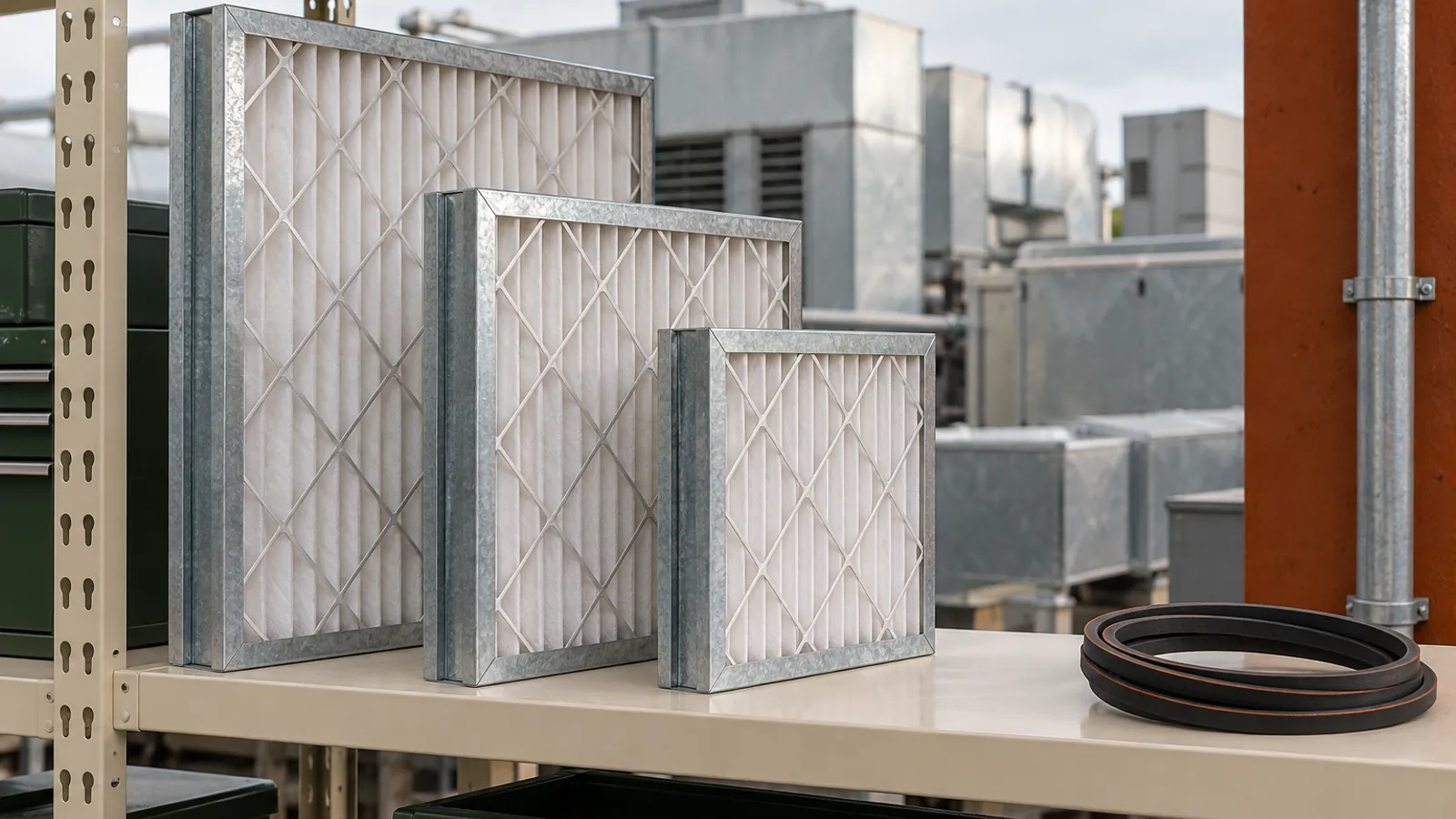
Keep an item register that identifies dimensions, approved performance specification, quantity installed and served equipment. Include any storage or purchasing restrictions. A supplier substitution should be reviewed through the facility’s approval process rather than accepted solely because it fits the nominal dimensions.
Find out what the annual fee already includes
Ask whether the quoted service includes supply, installation, disposal and reporting for consumables. An agreement might include labor but exclude materials, or include an allowance subject to an annual cap. Record both the cap and the price treatment above it.
Do not add the full material budget again if the contractor’s annual price already includes those materials. Equally, do not enter zero because the contract says filters checked. Checking and replacing are different tasks. Request a written count and specification so that two bidders can be compared on the same requirement. Clarify who owns unused stock when the agreement ends.
Use a count-based illustrative worksheet
Illustrative example only: eight installed filter positions each receive three planned replacements, using an invented $18 unit cost. Materials are eight × three × $18 = $432 annually. If an invented $120 disposal and delivery allowance is excluded from the service fee, the separate allowance becomes $552. None of these figures is a market price or a recommended replacement frequency.
If installation labor is already included in preventive service, do not add it a second time. If the contract includes one of the three planned replacements, calculate only the remaining two in the separate allowance. Document the actual replacement basis rather than using this teaching schedule without technical review.
Manage stock and exceptions
Decide who orders materials, where they are stored and how use is recorded. A stock list should connect withdrawals to an asset and date. Record damaged or unsuitable stock separately from normal consumption so that the next budget does not treat a one-time loss as recurring demand.
When condition requires an earlier change, record the reason and seek the appropriate approval. When a planned change is deferred, record the condition and decision as well. A fixed calendar alone cannot explain exceptions. The goal is not to maximize replacement counts; it is to keep the approved maintenance program traceable and technically appropriate.
Compare bids on a common consumables schedule
| Item to settle | Written answer needed |
|---|---|
| Specification | Approved item and substitution process |
| Quantity | Installed count by asset |
| Replacement basis | Manufacturer and site-specific program |
| Labor | Included or separately priced |
| Delivery and disposal | Included, capped or excluded |
| Stock ownership | Owner, contractor or consignment |
Belts and other small parts may need a different planning method from filters. Do not automatically apply the same replacement frequency to every consumable. Ask the contractor which items are condition-based and which are scheduled, and how an exception becomes an approved purchase.
Reconcile purchases with the service record
At period end, compare opening stock plus purchases minus closing stock with documented installation and recorded losses. Investigate differences before changing next year’s allowance. A higher purchase total may reflect a stock build rather than higher annual consumption.
Ask for service records that identify both the asset and the item installed. An invoice line saying supplies is difficult to audit. For any proposed change in filter performance or configuration, involve a qualified professional who can evaluate the system implications. This procurement guide does not authorize modifications or establish an indoor-air-quality standard for your building.
Separate a specification change from a price substitution
If a bidder proposes a different consumable, ask whether it is an equivalent approved item or a change to the maintenance program. Obtain the qualified reviewer’s decision before treating the lower price as a saving. A change can affect more than purchasing cost, and this guide cannot determine compatibility from a product description.
Record the old and new specifications, the reason for the change and the approval. Update the stock list and task schedule together so the service team does not continue using an obsolete item. If existing stock remains, decide how it will be handled rather than quietly consuming it after the approved requirement has changed. Include the transition cost in the comparison when it is material.
FAQ
Should I choose the cheapest matching size?
No. Use the approved specification and substitution process; nominal dimensions alone are not the full requirement.
Is quarterly replacement assumed here?
No. The example uses invented counts solely to demonstrate arithmetic.
Can I use purchasing totals as annual consumption?
Only after accounting for inventory changes, losses and materials used outside the scope.
Related decisions
- Commercial HVAC maintenance costs: build a defensible annual budget
- Why two HVAC maintenance quotes can be far apart
- What a commercial HVAC maintenance contract should spell out
- Budgeting maintenance for a fleet of rooftop units
- How to set an HVAC repair reserve without pretending to predict failures
- Refrigerant costs and 2026 rules: verify applicability before budgeting
- Compare service arrangements
- Use the related planning tool
Sources and limits
- ENERGY STAR — Operation and Maintenance Best Practices — operating schedules, documentation and performance tracking; not price data.
Source links were checked during this implementation on October 30, 2026. Dollar examples are original illustrative arithmetic, not official prices. This guide is general planning information; building-specific technical, safety and compliance decisions require qualified review.