What a commercial HVAC maintenance contract should spell out
Read preventive maintenance coverage by task, asset and exclusion, including repairs, consumables, response terms and completion evidence.

A contract title is not a coverage schedule
A commercial HVAC maintenance agreement should state the equipment, tasks, frequency, deliverables and commercial boundaries of the work. The label preventive maintenance does not establish whether filters, coil cleaning, repairs or refrigerant are included. Read the actual schedule and exclusions together. If the document leaves a necessary task ambiguous, ask for a written amendment rather than relying on a sales conversation.
Begin with the asset register. Attach the agreed version to the contract and explain how additions or removals affect price. A general reference to all HVAC equipment can create a disagreement later, especially where tenant equipment and landlord equipment share the building.
Translate visit counts into specific tasks
A visit count only tells you how often someone is scheduled to attend. It does not explain what happens at each attendance. Ask for a matrix with assets down one side and tasks or seasonal activities across the other. Use manufacturer documentation and qualified technical input to establish the required program.
Specify how inaccessible equipment, unsafe access or occupied-space restrictions are recorded. A visit that cannot be completed should produce an exception and a rescheduling decision. Decide whether a return visit is included when the access failure is caused by the facility. This is a commercial allocation to agree, not a universal rule supplied by the site.
Separate consumables from repairs
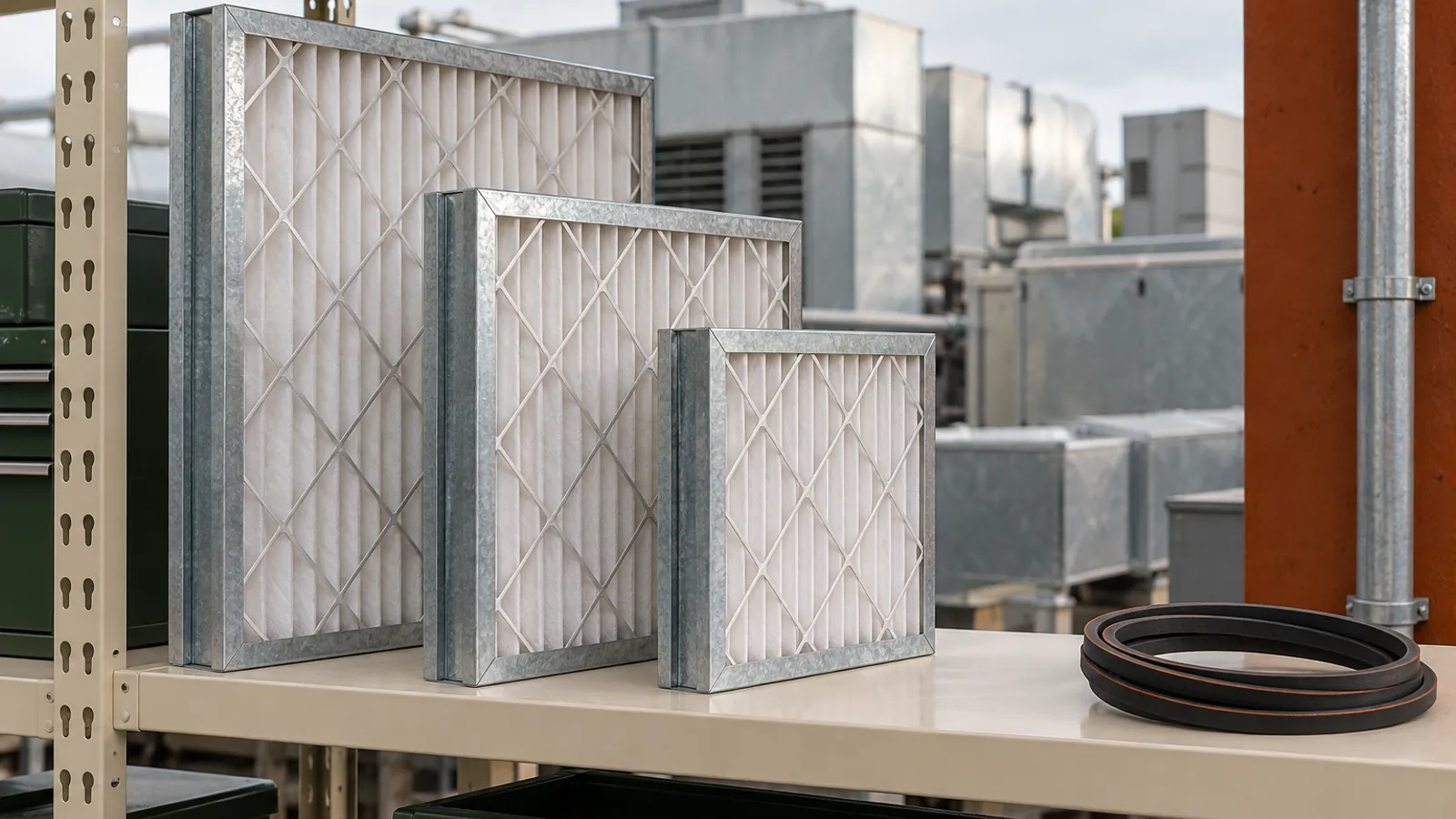
Name the consumables included in the annual fee and the assumptions used to count them. Filter changes should identify the approved specification and equipment locations; an unspecified filter allowance is difficult to audit. Belt replacement and other small parts also need an explicit treatment.
Repairs need their own boundary. Ask whether diagnosis, labor, parts, freight, refrigerant and specialist subcontractors are covered, excluded or capped. State the approval limit and who can authorize additional work. An instruction to make necessary repairs without a limit may be unsuitable for your purchasing controls. Do not assume that broader coverage removes every condition or age exclusion.
Distinguish attendance from restoration
An emergency response clause may promise acknowledgement, dispatch or site attendance. Those milestones differ from restoring service. Ask when the clock starts, which hours count and what events pause it. Check whether remote triage qualifies as response and whether parts procurement is outside the commitment.
For critical spaces, discuss contingency arrangements separately. A maintenance contract alone may not provide temporary cooling, rental equipment or priority stock. Document who decides when to escalate and who may approve emergency spending. A qualified facilities team should determine what continuity measures are appropriate; this guide does not establish a service level for a particular occupancy.
Set acceptance evidence before signing
| Contract element | Acceptance evidence |
|---|---|
| Scheduled task | Asset ID, task, date and completion status |
| Measurement | Value, units and operating condition |
| Defect | Finding, consequence and recommended action |
| Extra work | Written authorization and itemized invoice |
| Deferred task | Reason, responsible person and next date |
Illustrative example: an agreement calls for twelve asset visits across three units over a year. If one unit is inaccessible during one visit, eleven completed asset visits plus one exception is more informative than a report saying all four site visits occurred. Define whether payment acceptance depends on reports and how disputed entries are corrected.
Read change and exit provisions
Check renewal, cancellation, escalation and scope-change language. Ask how the contractor will handle asset retirement, new equipment, changed hours and manufacturer warranty requirements. Keep warranties separate from service commitments unless the agreement explicitly connects them. Obtain legal review where liability, indemnity or termination terms are material to the business.
Finally, keep the signed scope, amendments and reporting template together. The person reviewing invoices should have the same documents as the person who selected the contractor. When staff change, this record preserves the difference between included work and separately authorized repairs. It also provides a clear starting point for the next bid exercise.
Make the reporting deadline usable
Agree when service reports must be delivered and who receives them. A report arriving after the invoice is paid may leave the owner without the information needed to question missing tasks or approve follow-up work. The appropriate deadline is a commercial choice to settle with the contractor, not a universal period supplied by this site.
Name the reviewer and an alternate. Define how an incorrect asset ID, missing measurement context or disputed completion status is corrected. Retain the original and corrected versions where the owner’s record process requires it. Reporting is part of the service scope because it supports action; it should not be treated as optional paperwork that can disappear when attendance is busy.
FAQ
Is refrigerant normally included?
There is no assumption here. The contract must identify refrigerant, recovery, leak work and related records explicitly.
Does a service agreement replace warranty coverage?
Do not assume so. Check the equipment warranty and the agreement separately with the relevant parties.
What should I do about a verbal promise?
Ask for it to be incorporated into the signed scope or an agreed amendment.
Related decisions
- Commercial HVAC maintenance costs: build a defensible annual budget
- Why two HVAC maintenance quotes can be far apart
- Budgeting maintenance for a fleet of rooftop units
- Filters and consumables: stop double-counting the small costs
- How to set an HVAC repair reserve without pretending to predict failures
- Refrigerant costs and 2026 rules: verify applicability before budgeting
- Compare service arrangements
- Use the related planning tool
Sources and limits
- ENERGY STAR — Operation and Maintenance Best Practices — operating schedules, documentation and performance tracking; not price data.
Source links were checked during this implementation on October 30, 2026. Dollar examples are original illustrative arithmetic, not official prices. This guide is general planning information; building-specific technical, safety and compliance decisions require qualified review.