Budgeting maintenance for a fleet of rooftop units
Organize rooftop unit costs around asset differences, access, seasonal work and defects, with an illustrative annual budgeting worksheet.
Group rooftop units by service need
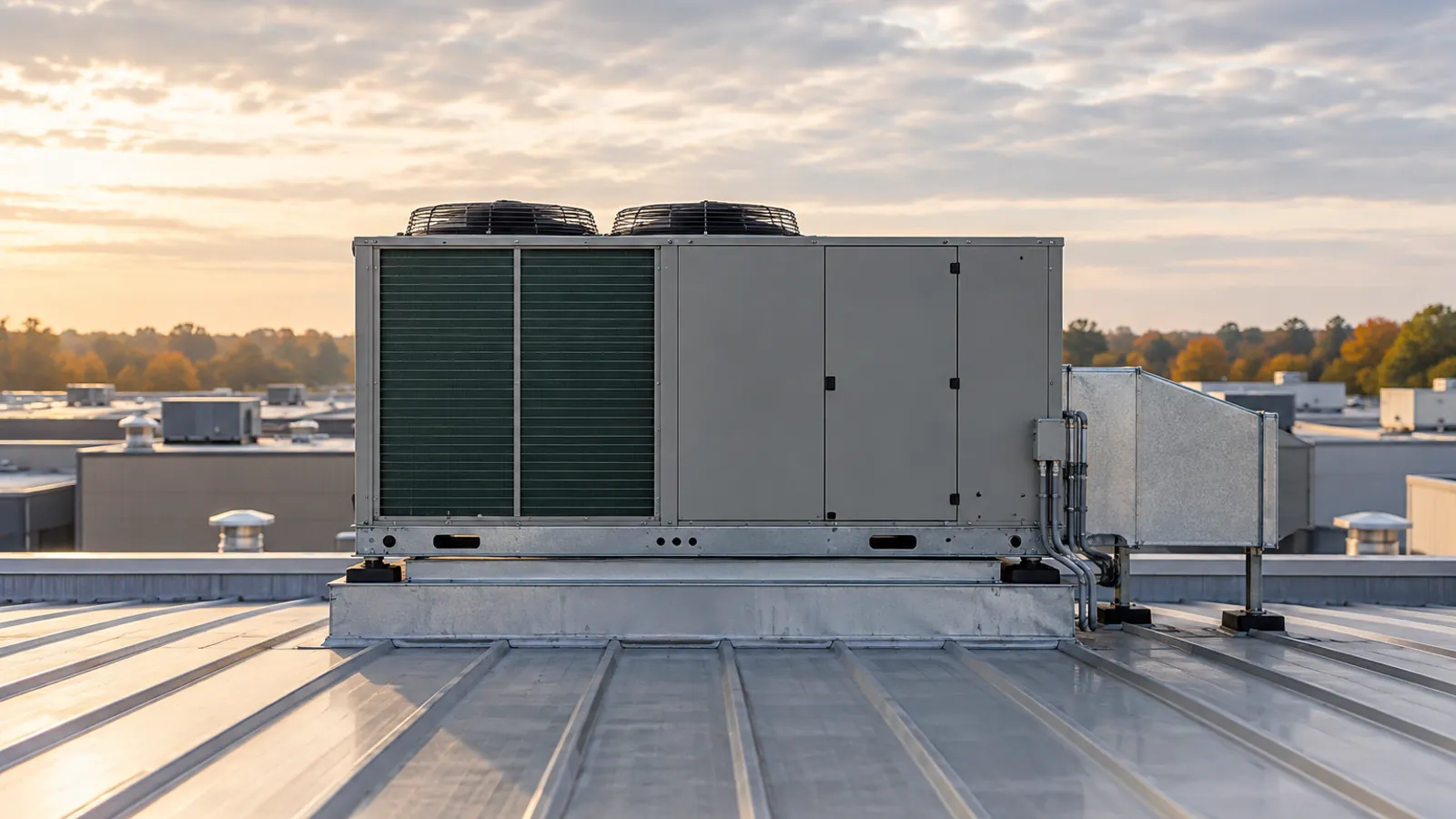
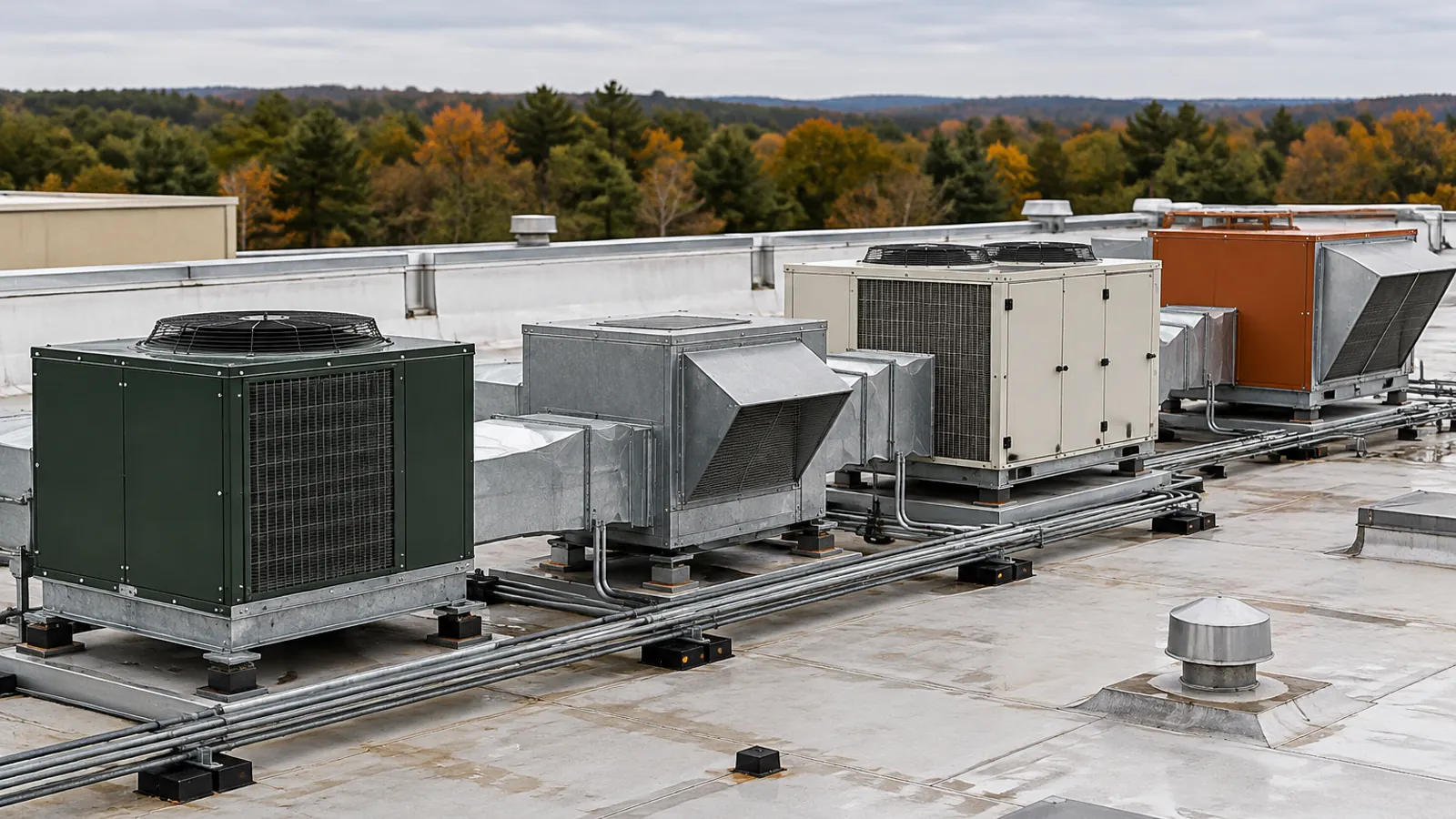
Budget a rooftop fleet by grouping comparable equipment and pricing a defined annual task program for each group. Do not multiply one convenient price across units with different configurations, duty or condition. Record whether the unit includes heating, economizer controls or other features that affect the service scope.
Use a roof plan with asset IDs that match the register and service reports. Record served spaces so that shutdown planning is connected to actual occupancy. Where model or capacity information is unavailable, mark it for survey. An uncertain inventory should produce a survey task rather than a confident but unsupported annual price.
Make access a planned cost
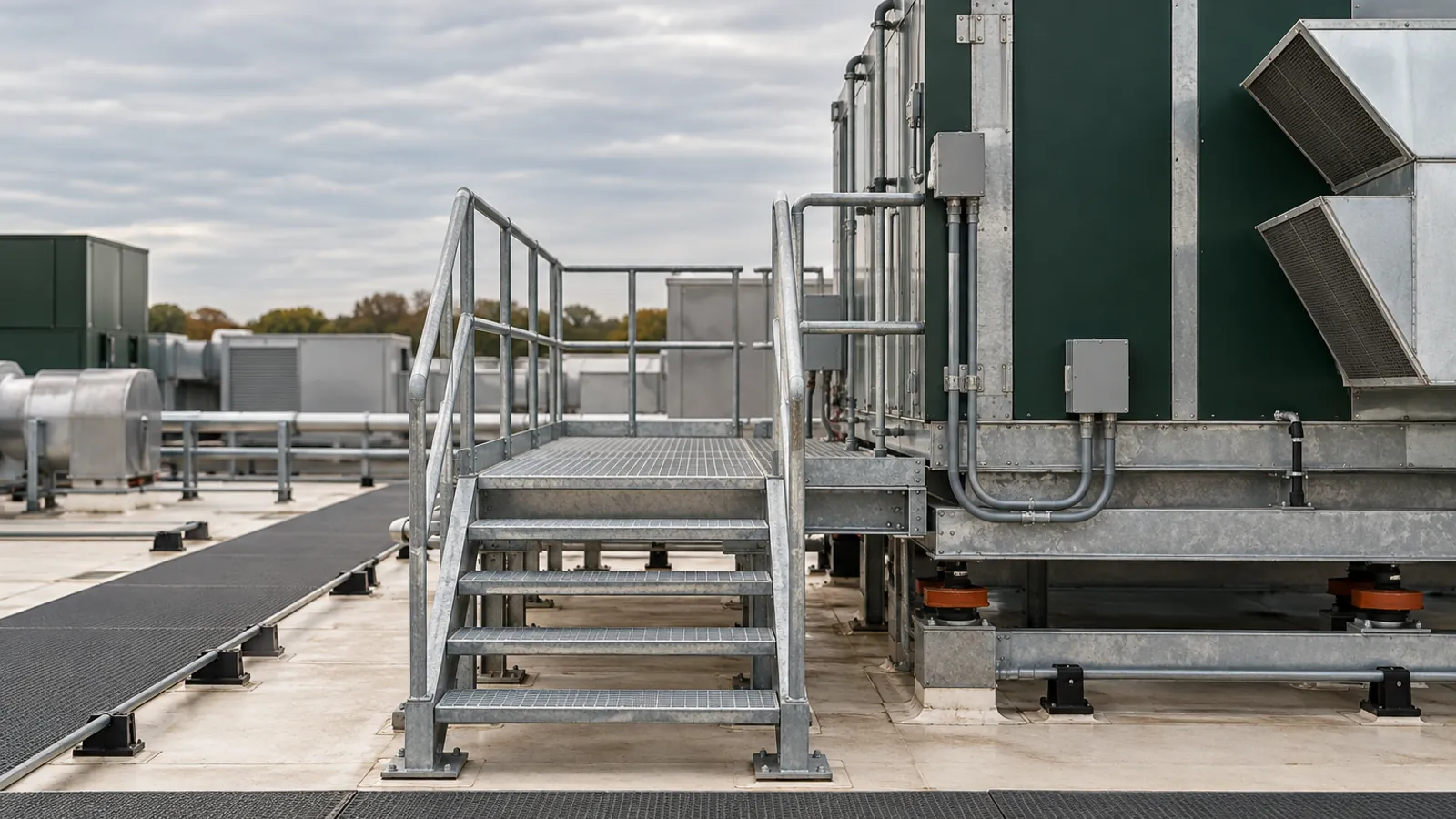
Identify the permitted roof route, access hours, key arrangements and site induction process. Ask who is responsible for safe access assessment and for stopping work when conditions are unsuitable. Do not ask untrained staff to inspect roofs or approach operating machinery to complete a budget worksheet.
If access equipment or escorts are required, obtain a building-specific price and identify whether it is annual, per attendance or per task. The same lift allowance should not be included in both a unit rate and a shared cost line. Schedule work with the facility’s qualified team and applicable safety procedures; the financial worksheet is not a roof-access method statement.
Separate service tasks from condition work
Routine task planning should follow manufacturer instructions and competent technical assessment. A unit that needs corrective work at the start of the year should have that work recorded separately. Include the defect description, the proposed remedy and the approval status.
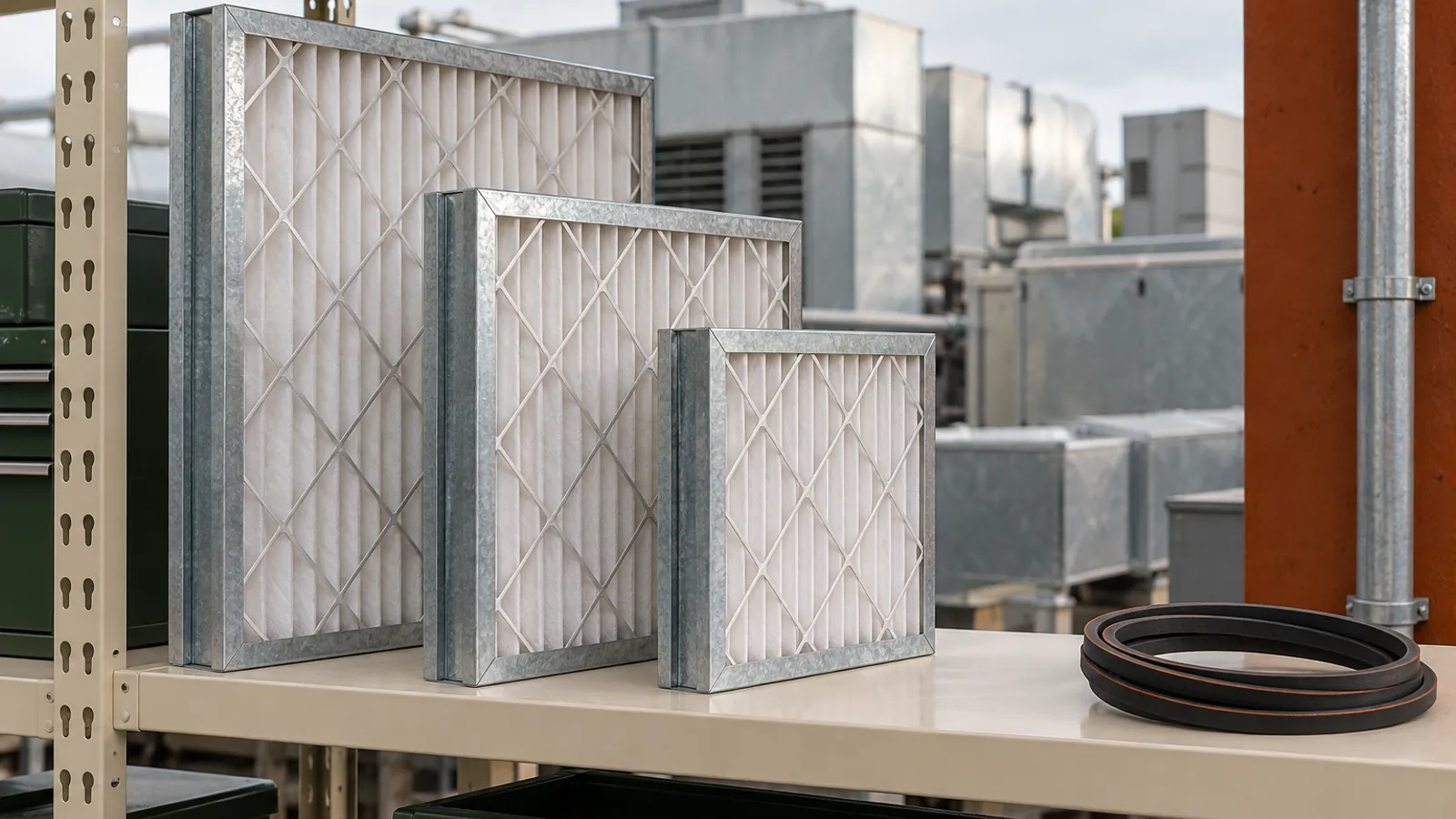
For budget purposes, ask the contractor to distinguish inspection, cleaning and repair. A visual observation of a coil is different from a priced cleaning task. Record whether consumables are supplied by the contractor or owner and whether they are included in the annual figure. This prevents a fleet budget from masking different service assumptions under a single per-unit average.
Calculate the annual allowance
Illustrative example only: four comparable units have a hypothetical annual service allowance of $700 each and two different units have $1,100 each. The scheduled total is four × $700 + two × $1,100 = $5,000. Add an invented $600 shared access allowance only if it is excluded from both group prices, giving $5,600. These are teaching inputs, not market observations.
Run separate calculations in the annual budget tool for each group. Keep the shared cost on one calculation or add it after summing the groups. If the contractor quotes per visit, convert the entire scope to an annual total first. Confirm whether each task repeats at every visit before multiplying.
Build a unit-level record
| Field | Why it belongs in the budget file |
|---|---|
| Asset and served space | Connect cost to operational impact |
| Annual task scope | Identify what the fee buys |
| Access assumption | Explain mobilization allowances |
| Known defects | Separate baseline service from repairs |
| Reported condition | Support later replacement review |
Track repeated faults by asset rather than only recording total spend. A low fleet average can hide one unit that consumes much of the repair allowance. Conversely, one expensive repair does not prove that every similar unit needs replacement. Use the record to ask better technical questions, not to diagnose equipment from invoices alone.
Review seasonal and occupancy changes
Before the next service year, compare the register with the actual building. Note tenant changes, longer opening hours, retired equipment and unresolved defects. Ask the service team whether those changes affect tasks or scheduling. Do not impose a generic seasonal schedule without considering the climate, equipment and manufacturer requirements.
For a replacement decision, obtain an equipment-specific assessment and an installed scope that includes access, controls and commissioning. Keep that capital project distinct from the annual service allowance. The national laboratory rooftop maintenance resource provides technical context; it does not price your roof or validate the illustrative unit allowances used in this guide.
Avoid a misleading portfolio average
If one unit has unusually difficult access or a specialized task, keep its allowance visible even when presenting a fleet total. An average can help summarize the budget, but it should not erase the reason a particular asset costs more to service. Retain group totals and the shared-cost line beneath the summary.
When comparing years, use the same grouping or explain the change. A falling average after several units are replaced may reflect a changed equipment mix rather than a lower price for unchanged work. The record should make that distinction understandable to someone who did not prepare the original worksheet.
FAQ
Can all rooftop units use the same allowance?
Only if their scope and conditions are sufficiently comparable. Otherwise group them and document the differences.
Should crane costs be part of annual service?
Include them only when the defined annual scope requires them and the price treatment is clear. Replacement lifting is usually a separate planning item.
Can staff estimate condition from unit age alone?
Age can prompt a review, but it does not replace service history and a qualified condition assessment.
Related decisions
- Commercial HVAC maintenance costs: build a defensible annual budget
- Why two HVAC maintenance quotes can be far apart
- What a commercial HVAC maintenance contract should spell out
- Filters and consumables: stop double-counting the small costs
- How to set an HVAC repair reserve without pretending to predict failures
- Refrigerant costs and 2026 rules: verify applicability before budgeting
- Compare service arrangements
- Use the related planning tool
Sources and limits
- National laboratory — Rooftop Unit Maintenance Guide — publication record and technical rooftop maintenance context.
Source links were checked during this implementation on October 30, 2026. Dollar examples are original illustrative arithmetic, not official prices. This guide is general planning information; building-specific technical, safety and compliance decisions require qualified review.